
Uposotha or the Buddhist Observance days is a term used in Buddhism to refer to days of special observance that are intended to deepen one’s spiritual practice and reflect on the Buddhist path. These days are observed by lay practitioners as well as monastics, and are an important aspect of the Buddhist calendar.
Observance Days follow the traditional Buddhist lunar calendar, which marks the new, full, and quarter moons. On the new and full moon days—known as Uposatha Days—monks gather to listen to the recitation of the Patimokkha rules.
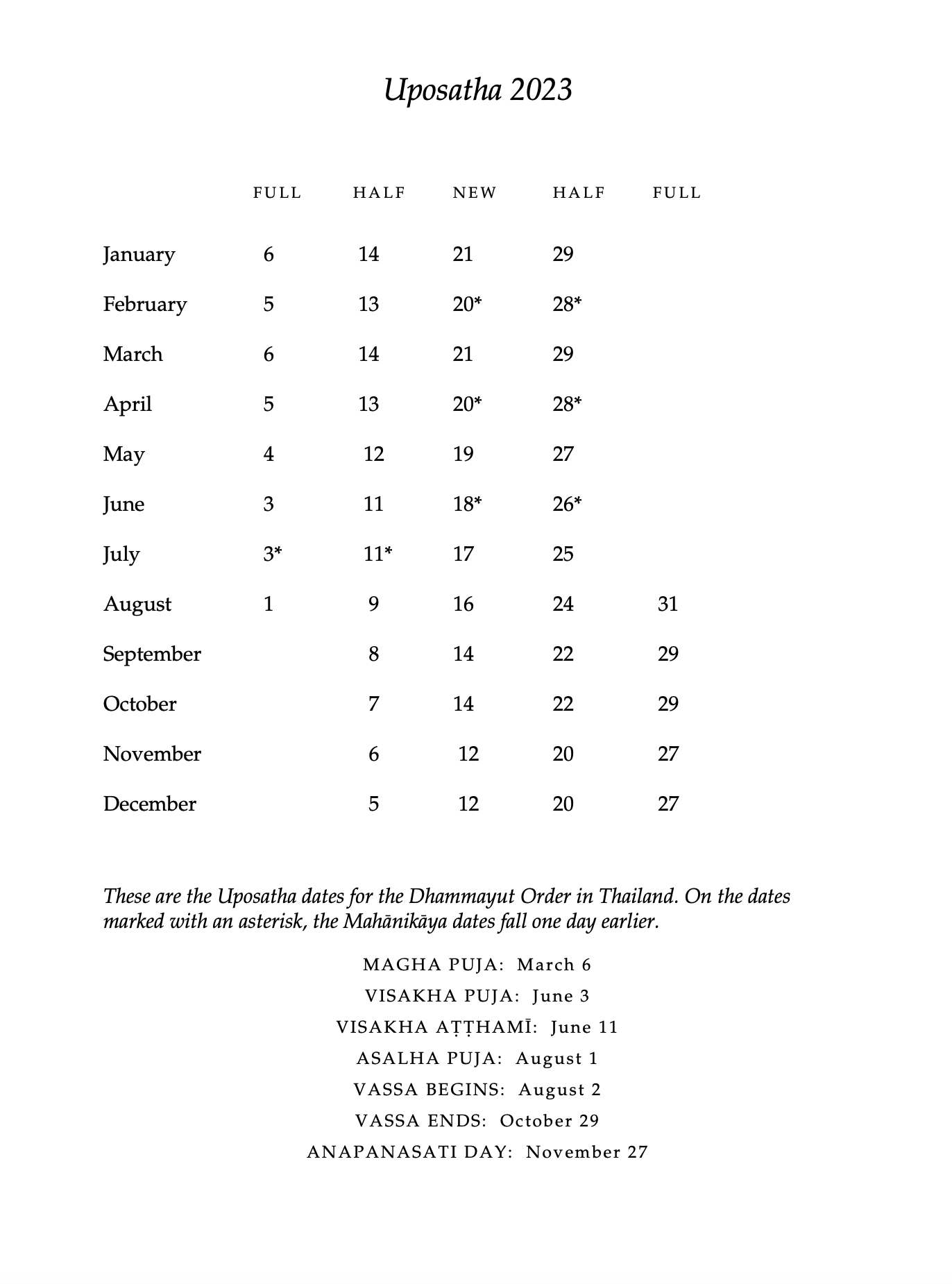
For lay followers, the quarter moon observances are special times to visit their local monastery, follow the precepts more closely, and spend time listening to and discussing the Dhamma.
In everyday life, practicing Buddhists generally observe the Five Precepts. But on Observance Days (or other special occasions), they may choose to follow the Eight Precepts, bringing their practice a little closer to the way monks and nuns live. The Eight Precepts being: not killing, not stealing, no sexual activity, not lying, no intoxicants, not eating after noon, avoiding entertainment and adornments(perfume, jewelry), and avoiding luxurious seats or beds.
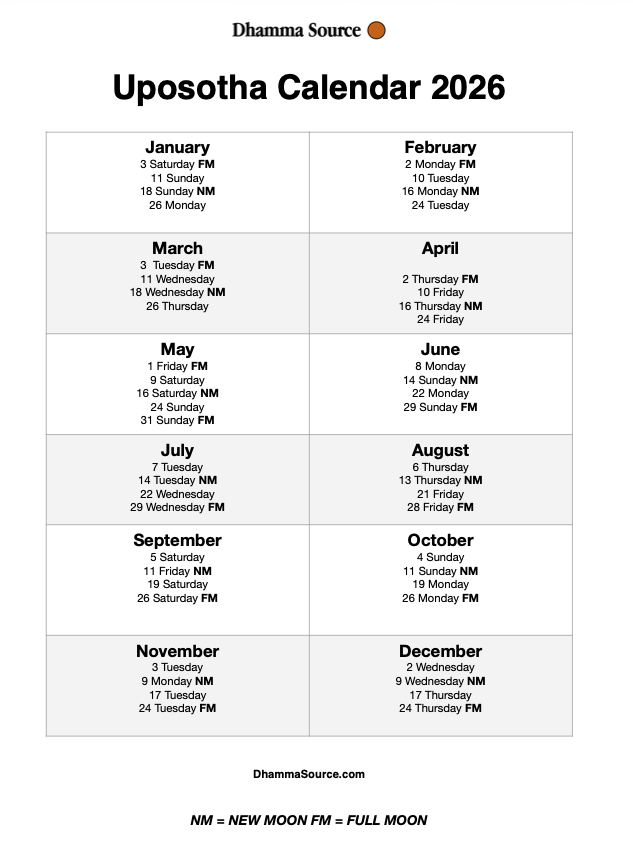
Below is the Uposotha calendar for 2026. Feel free to download it as a pdf as well!